Fri., Nov. 6, 2026
8:30am – 11:30am
Room 106-A (Lecture)
Speakers: Owais A. Farooqi, DDS ’06, MDS, MPH, FACHE, Seth Gibree, DMD, FAGD, Chun Wang (Reinhard) Chau, BDS, MSc, CPH, FICD, FDS RCS Eng, MIET, MIEEE, Mark Whitefield, DDS, AFAAID, AAACD, Faraz Moharrami, DDS, PhD, and Loren King, RDH
Recommended for: Everyone
Moderator: Owais A. Farooqi, DDS ’06, MDS, MPH, FACHE
DENTISTRY IN THE AGE OF AI: WHAT’S HERE. WHAT’S COMING. WHAT IT MEANS FOR US.
Speaker: Owais A. Farooqi, DDS ‘06, MDS, MPH, FACHE
Artificial intelligence is already being used across dentistry, from image interpretation and disease measurement to patient communication, workflow, and decision support. Other applications are moving quickly from research toward practice.
This opening keynote will take a wide-angle look at where dental AI stands today, what may be coming next, and what those changes mean for clinicians and patients. It will also examine the questions that become more important as these systems become more capable: What does FDA authorization tell us? How should we interpret evidence and validation? What happens when an AI finding and a clinician’s judgment differ?
The larger question is not simply what AI can do, but what kind of dentistry we want to build with it.
Learning Objectives:
- Describe current and emerging applications of artificial intelligence across clinical care, patient communication, workflow, and decision support in dentistry.
- Interpret FDA authorization, validation evidence, and clinical performance when evaluating an AI-enabled dental technology.
- Examine how AI-generated information can influence clinical judgment and identify considerations for incorporating it into patient.
BRIDGING THE GAP: A HUMAN-CENTRIC BLUEPRINT FOR CLINICAL AI IMPLEMENTATION
Speaker: Seth Gibree, DMD, FAGD
As artificial intelligence revolutionizes dental diagnostics and treatment planning, the most critical factor for success remains the people using the technology. This session provides a practical, step-by-step change management blueprint for building a “human‑in‑the‑loop” practice. Attendees will learn how to seamlessly integrate AI into daily clinical workflows, establish clear communication talk tracks, and manage patient perceptions during the transition. By combining actionable operational strategies with targeted team education, practice leaders will leave equipped to foster seamless AI adoption that empowers their staff and elevates patient trust.
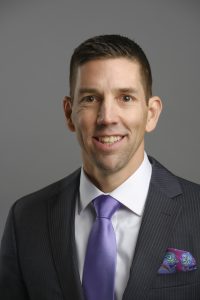 Seth Gibree, DMD, FAGD, s a leading advocate for the ethical and operational integration of artificial intelligence in dentistry. At Heartland Dental, he serves as the Senior Director of Clinical AI and Innovation, standing at the forefront of strategic industry development. Leveraging his clinical background as a multi-practice owner, he scales emerging technologies from initial concept to enterprise-wide rollout across the nation’s largest dental support organization. As a founding advisory board member for the American Academy of Artificial Intelligence in Dentistry and the VideaHealth AI Leadership Council, he guides the profession in responsible AI adoption, focusing on change management and empowering clinical teams. His work is driven by a simple mission: to wake up every day and make dentistry better for patients and clinicians through AI and innovation.
EXPLAINABLE AI – EMPOWERING UNDERSERVED PATIENTS’ ORAL HEALTH
Speaker: Chun Wang (Reinhard) Chau, BDS (Sun Yat-sen), MSc (Com Dent) (HK), CPH, FICD, FDS RCS Eng, MIET, MIEEE
This practical session will showcase real-world experiences deploying explainable AI tools directly into underserved communities. The presentation demonstrates how these accessible, transparent technologies provide quality oral health education to underprivileged older adults, diabetic patients, and cancer survivors—empowering them to understand their risks and adopt consistent hygiene practices. Attendees will gain insights into practical, low-barrier approaches for integrating similar AI-driven patient education into daily dental practice, enhancing engagement and outcomes without complicating the clinical workflow.
Learning Objectives:
- Describe how explainable AI tools can deliver accurate, accessible oral health education to vulnerable populations, including underprivileged older adults, diabetic patients, and cancer survivors.
- Identify practical methods for implementing AI-driven education programs in underserved communities.
- Explain the effects of AI-driven interventions on patient empowerment and the adoption of effective oral hygiene practices.
- Discuss ways clinicians can incorporate similar patient education tools into everyday practice to improve outcomes, especially among at-risk groups.
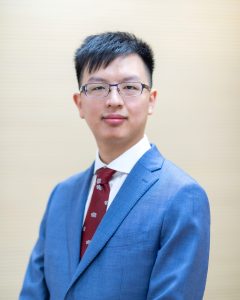 Chun Wang (Reinhard) Chau, BDS (Sun Yat-sen), MSc (Com Dent) (HK), CPH, FICD, FDS RCS Eng, MIET, MIEEE is a PhD candidate in AI-Powered Preventive Dentistry at The University of Hong Kong and the founder and CEO of a social enterprise. A pioneer in translating AI and health research into community impact, he developed and scaled one of the first AI-powered smartphone tools for early gingivitis detection and personalized oral care, moving it from bench to bedside, and deployed it across senior daycare centers and chain pharmacies in Hong Kong, where it achieved high acceptance and retention, with significant improvements in oral hygiene, gingival health, and oral health-related quality of life. Two of his academic works are among the top 1% most-cited in Clinical Medicine on Web of Science, and he has received 2 IADR awards. He currently serves on the Council for Education and Professional Learning of the American Academy of Artificial Intelligence in Dentistry (AAAI-D) and holds leadership roles in the American Medical Informatics Association (AMIA) Dental Informatics Working Group and the ITU/WHO/WIPO Global Initiative on Artificial Intelligence for Health (GI-AI4H), Dental Diagnostics and Digital Dentistry (Topic Group Oral Health). Since 2023, he has participated in volunteer dental outreach, partnering with NGOs to provide free, AI-powered oral health screenings, education, and care to over 5,200 underserved older adults and students through community programs.
AI-ENHANCED OPTICAL TECHNOLOGIES IN DENTISTRY: CLINICAL APPLICATIONS AND WORKFLOW INTEGRATION
Speaker: Mark Whitefield, DDS, AFAAID, AAACD
The course provides an in-depth look at how artificial intelligence (Al)-driven optical technologies are transforming dental practice. It focuses on the integration of advanced tools such as augmented reality optics, which are increasingly being used for surgical visualization, enhanced magnification, digital guidance, and case documentation. The session draws parallels to technologies previously used in medical specialties like neurosurgery and orthopedics, highlighting their growing relevance in dentistry. Attendees will explore practical, real-world applications of these innovations, including how Al-enabled optics can improve precision, ergonomics, communication, and decision-making in daily dental workflows. The course includes multiple clinical use cases and case studies that demonstrate a range of Al optical capabilities, such as ergonomic enhancement, advanced magnification, patient and staff communication, voice dictation, digital implant targeting, voice-activated large language model (LLM) integration, and heads-up display functionality. The overall goal is to present these advancements in a clinically relevant and accessible manner, enabling participants to assess the value and potential return on investment of adopting new Al-driven tools in their own practices.
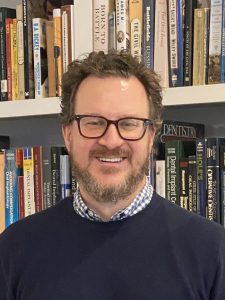 Mark Whitefield, DDS, AFAAID, AAACD, is an experienced implant dentist based in Nashville, Tennessee, with over three decades in clinical practice. He holds accreditations from both the American Academy of Cosmetic Dentistry and the American Academy of Implant Dentistry. Dr. Whitefield has contributed to advancements in dental technology and education, focusing on practical solutions for implant and restorative dentistry.
BEYOND IMAGING AND DIAGNOSTICS: USING AI TO ADVANCE PROGNOSTICS AND PERSONALIZED TREATMENT PLANNING
Speaker: Faraz Moharrami, DDS, PhD
Explore AI’s clinical potential beyond imaging using structured patient data. This presentation deconstructs data science tasks and discusses how prognostics and counterfactuals for treatment planning are underutilized compared to diagnostics. Discover how machine learning can accurately forecast individualized prognostic risks, such as osteoradionecrosis, moving beyond one-size-fits-all metrics. Learn to optimize interventions, like pre-radiotherapy dental extractions, using causal machine learning to precisely target treatments and avoid patient harm. Finally, explore live, web-based clinical decision support demo tools that could empower clinicians and patients to make highly personalized, evidence-based care choices.
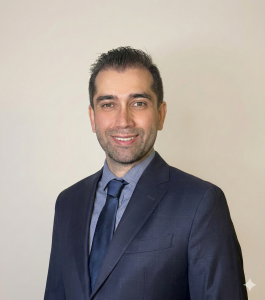 Faraz Moharrami, DDS, PhD is a clinician specializing in dental public health and a data scientist. He leverages predictive modeling, computer vision, and counterfactual analysis to solve complex healthcare challenges, from epidemiological modeling to targeted precision medicine. His career spans data science roles at Statistics Canada and the Princess Margaret Cancer Centre, as well as extensive industry consulting. He is deeply invested in the global adoption of dental AI, having contributed to the ITU-WHO Focus Group on AI for Health and serving as a founding Advisory Board Member for the American Academy of Artificial Intelligence in Dentistry (AAAI-D).
WHERE AI MEETS THE CHAIR: CLINICAL DECISION-MAKING, PATIENT COMMUNICATION, AND THE DENTIST–HYGIENIST DYNAMIC
Speaker: Loren King, RDH
As artificial intelligence continues to enter clinical dentistry, the real question is not if it will be used, but how it is interpreted and applied chairside. This course explores the day-to-day reality of integrating AI into clinical workflows, focusing on collaboration between dentists and hygienists. Through real-world scenarios, attendees will examine where AI enhances efficiency and diagnostic support, where it requires guardrails, and how clinical judgment remains essential.
A key component of this session is how AI impacts patient communication and trust. By combining clinical insight with human behavior and communication strategies, this course highlights how providers can use AI responsibly to improve case acceptance, patient understanding, and overall outcomes.
 Loren King, RDH, is a registered dental hygienist and global speaker specializing in the integration of artificial intelligence into clinical dentistry. With nearly a decade of clinical experience and years on national stages, she is known for translating complex AI concepts into practical, patient-centered applications. Loren educates dental teams on how to use AI to enhance diagnostic accuracy, improve documentation, and streamline workflows while maintaining clinical judgment and ethical responsibility. Her work bridges the gap between emerging technology and real-world patient care, helping providers adopt AI with confidence and clarity. She also serves as the Co-Lead, in American Academy of Artificial Intelligence in Dentistry (AAAI-D)’s Council for Allied Healthcare Professionals.
Faculty Panel & Audience Q&A
Dr. Chau (or an immediate family member) has a significant relationship with the following commercial organizations whose products he will refer to in his presentation: Dentomi Limited.
Dr. Gibree (or an immediate family member) has a significant relationship with the following commercial organizations whose products he will refer to in his presentation: Heartland Dental.
Drs. Whitefield and Moharrami and Ms. King (or an immediate family member) are not associated with, employed by, nor consult for any manufacturer, supplier, or retailer of dental instruments or materials.
The University at Buffalo School of Dental Medicine, Office of Alumni Relations and Professional Engagement designates this activity for 3 continuing education credits.